

A1Horror2 min
The Thirteenth Step
Every night, Damián counts the twelve wooden steps to his bedroom. Tonight, his foot finds a thirteenth—and something beneath the stairs has been waiting.
Spanish horror stories written for learners. Each story is graded to a single CEFR level, so you can pick ones you mostly understand and learn new words from context, tapping any word for its translation.
Every night, Damián counts the twelve wooden steps to his bedroom. Tonight, his foot finds a thirteenth—and something beneath the stairs has been waiting.

Grey stone, an inch from the front door. No street, no sky, no way out. And his mother keeps eating the same piece of bread.

Every night, Julián counts the doors in his house before bed. There are always six. Tonight, there are seven.

Isabella is happy with her book and her small light. But the dark brings something cold — and it does not want to let go.

Paloma's sleep app recorded forty-five minutes of something whispering her home address at 3 AM. By morning, the recording had vanished.

Your bedroom walls are blue. You know this. So why are they green now — and whose hand is pressing back from the other side of the door?

Tomás is alone in his Buenos Aires apartment when his computer screen turns blue and a message appears: 'Don't look behind you.' The room grows cold, and something begins to move closer.
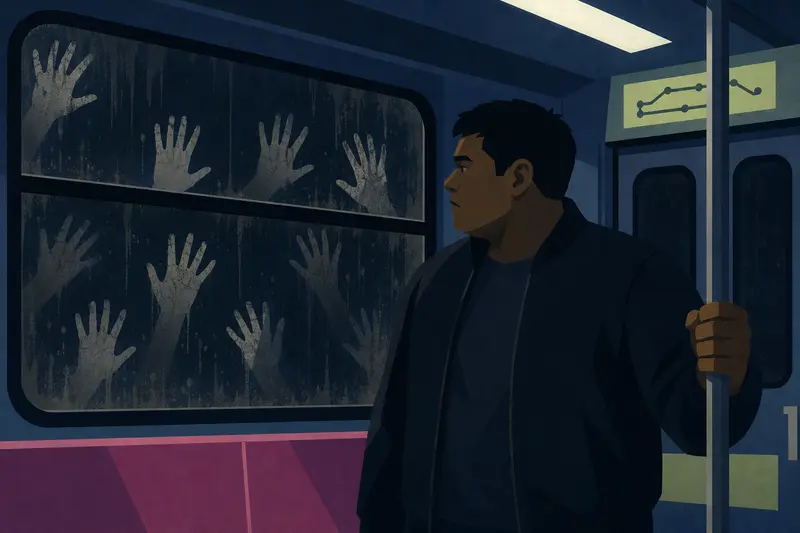
When Ignacio's late-night train stops in a pitch-black tunnel, something outside the windows wants in—and what he discovers on the glass afterward is worse than the dark.

In the cold rain, Simón sees a small girl standing under a street light. She wears a yellow coat. She does not move. She does not speak. And when he gets close enough to see inside the coat, there is no girl at all.

Denis and his mother eat dinner in their small house near a cornfield. The scarecrow outside wears his missing father's coat — and tonight, it isn't staying in the field.
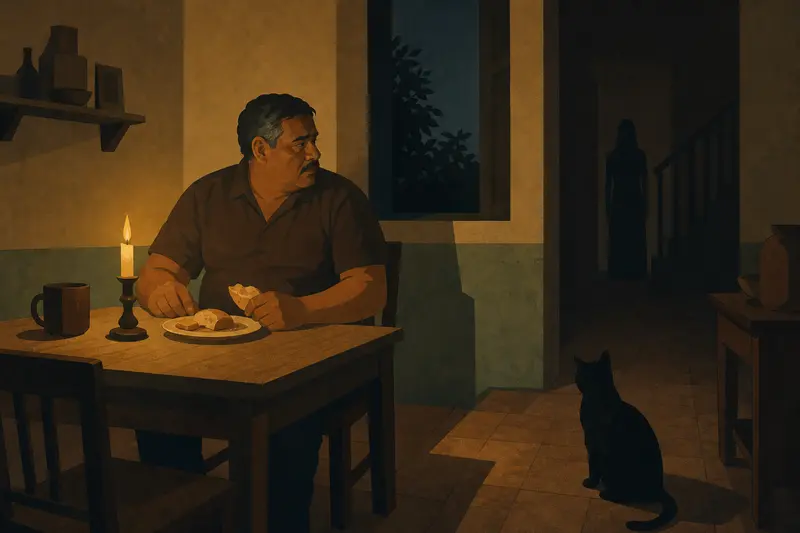
Reynaldo eats his bread alone every night. Tonight, he is not alone.

Thiago wakes in his freezing bedroom with the door and window shut tight. When he looks toward the foot of his bed, he realizes he is not alone.

The night bus is cold. The driver has gray hands. And the door is gone.

A bronze plaque in a forgotten town square bears his name, his face, and the year he supposedly died. Wílmer Reyes is standing right in front of it, very much alive. For now.

Montserrat wakes up in her own bedroom—same furniture, same photos, same lamp. But the door is gone. The window is gone. And she's starting to suspect she isn't alone.

Wilmer finds an old book in a shop — and inside, his own house stares back at him. But the man at the window in the picture looks exactly like Wilmer. And he looks very, very sad.

Martín falls asleep on his usual commuter train—and wakes up in a carriage where the passengers, the clothes, and the silence all belong to another century.

Álvaro lives alone in an old house. One cold night, he finds wet tracks leading inside—but none leading out. Someone is in his house. He just can't see who.

A woman finds a photo of her house online. The house is on fire. She looks outside—everything is fine. Then the photo changes.

There is no light in the room. So why is the shadow still dancing?

Three thousand pesos for a heavy winter coat. A finger bone sewn into the lining. And a note in shaky handwriting: if you feel cold in your bones, it's already too late.

The radio on Lorena's table is old. It is bad. It does not work. But tonight, it has something to say.

When Valentín inherits his reclusive uncle's house, he finds it crammed with hundreds of clocks—all ticking at different speeds. Then, at 3 AM, every single one stops. And in that silence, something begins to move.
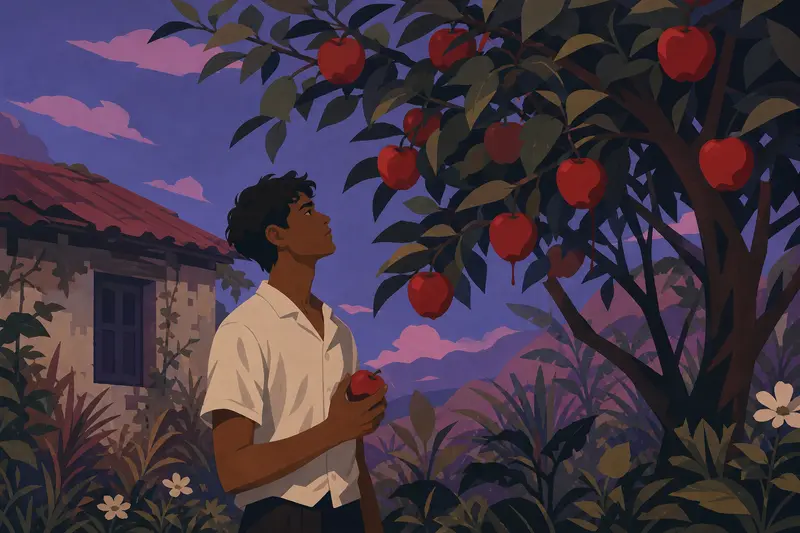
The apples on the old tree behind the grandmother's house are perfect. Cold, sweet, impossible to stop eating. And there is always one more apple than yesterday.